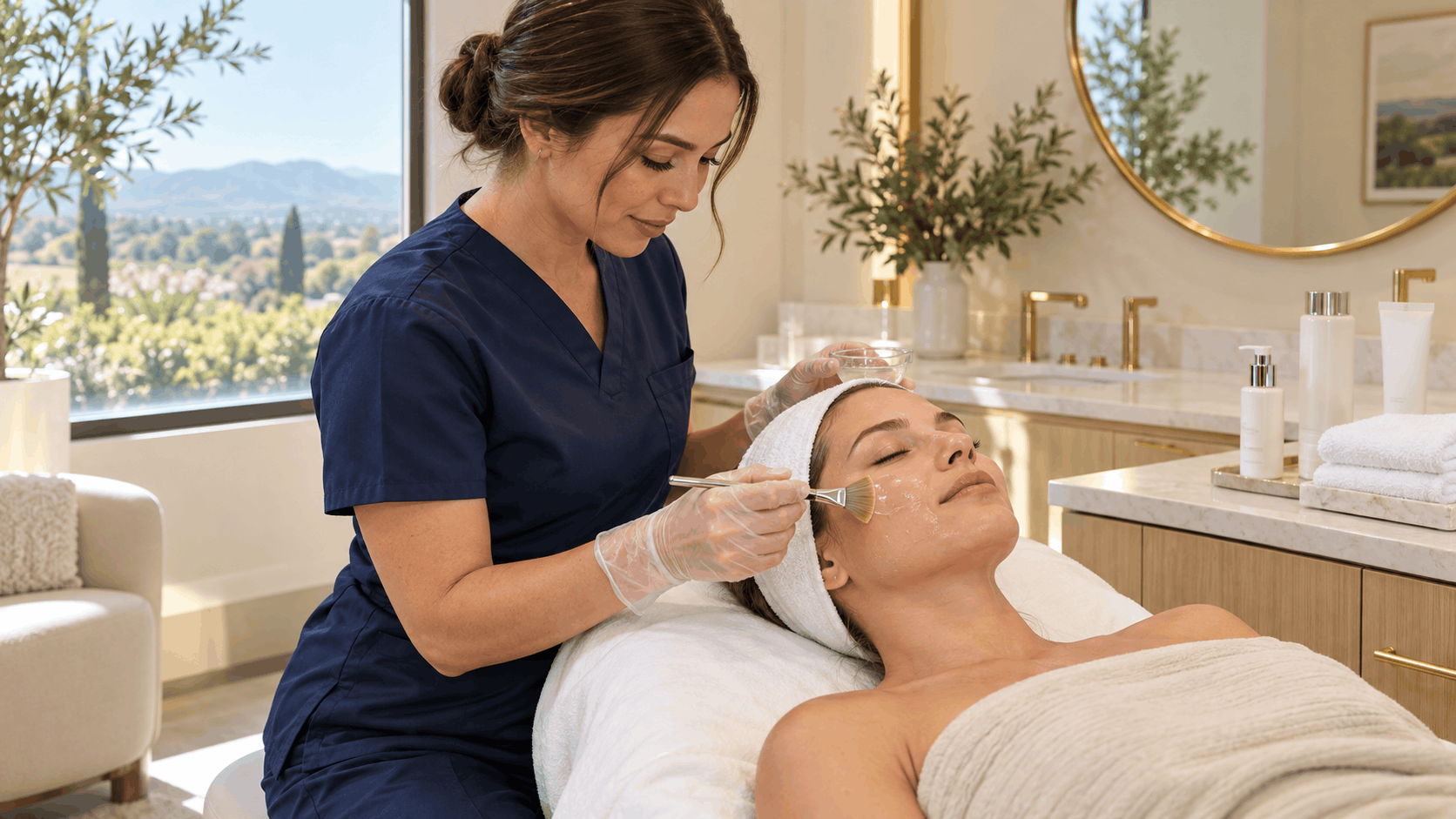
Dull skin, uneven texture, stubborn congestion, and lingering discoloration can make your complexion look less refreshed than you would like. Even with a consistent skincare routine, certain concerns may benefit from professional treatment.
That is where the C2O2 Signature Peel comes into the conversation.
A signature peel is a professionally selected exfoliating treatment intended to address specific skin concerns. Unlike an everyday exfoliating cleanser, a chemical peel uses carefully selected ingredients to encourage the shedding of surface skin cells and improve the appearance of the complexion.
However, not every peel works the same way. The ingredients, treatment strength, application technique, and recovery expectations all influence the experience.
At Advanced Life Clinic, we believe skin rejuvenation should begin with understanding your skin rather than choosing the most aggressive procedure available. The right peel depends on your concerns, sensitivity, treatment history, and overall skin health.
If you are wondering whether the C2O2 Signature Peel is right for you, this guide explains how chemical peel treatments work, who may benefit, what to expect, and when another approach may be more appropriate.
Jump To:
- TLDR Guide
- Detailed Breakdown
- What Is the C2O2 Signature Peel?
- How Does a Chemical Peel Work?
- Who Is the C2O2 Signature Peel Best For?
- Who Should Avoid or Postpone a Chemical Peel?
- What Happens During a C2O2 Signature Peel Appointment?
- How Does the C2O2 Signature Peel Support Skin Renewal?
- Does the C2O2 Signature Peel Cause Visible Peeling?
- How Long Is Recovery After a C2O2 Signature Peel?
- Can the C2O2 Signature Peel Help With Acne Scars?
- How Many C2O2 Signature Peel Sessions Might You Need?
- How Does the C2O2 Signature Peel Compare With Other Skin Rejuvenation Options?
- Why Skin Barrier Health Matters Before a Chemical Peel
- How Should You Prepare for a C2O2 Signature Peel?
- Is the C2O2 Signature Peel Worth Considering?
- What Is the C2O2 Signature Peel?
- Key Takeaways
- FAQs
TLDR Guide
The C2O2 Signature Peel is a professional peel service that patients may consider when exploring treatments for dullness, uneven-looking texture, and other surface-level skin concerns.
The exact benefits and recovery expectations depend on the ingredients and protocol used. Because a service name does not establish the peel’s chemical composition or strength, those details should be confirmed during your consultation.
Here is what to know:
- Primary goal: Improve selected cosmetic concerns through professional skin exfoliation.
- Potential candidates: Patients seeking a smoother-looking, more refreshed complexion who are medically suitable for the specific peel.
- Treatment strength matters: Superficial, medium-depth, and deep peels have different effects and recovery requirements.
- Results vary: Some concerns may improve after one treatment, while others require multiple sessions or a different approach.
- Downtime is not universal: Redness, dryness, flaking, and visible peeling depend on the treatment protocol and individual response.
- Skin barrier health matters: Irritated, sunburned, or compromised skin may need time to recover before exfoliation.
- Professional evaluation is essential: Skin tone, medical history, medications, and treatment goals influence suitability.
The bottom line: The best candidate for a C2O2 Signature Peel is someone whose skin concerns match the treatment’s actual formulation and whose skin can safely tolerate the recommended level of exfoliation.
Detailed Breakdown
What Is the C2O2 Signature Peel?
The C2O2 Signature Peel is a named professional peel service.
Like other chemical peel treatments, its suitability should be evaluated according to the ingredients used, intended treatment depth, application protocol, and the patient’s skin condition.
An important distinction: the name C2O2 Signature Peel alone does not identify a standardized chemical formulation. Patients should ask their provider to explain the specific ingredients and treatment steps rather than assuming the service is identical to another peel with a similar name.
What Makes a Signature Peel Different?
The term signature generally identifies a treatment offered under a particular service name.
It does not automatically indicate that the peel is stronger, safer, more effective, or more suitable for sensitive skin than other options.
What matters clinically is the treatment itself.
A thorough consultation should clarify:
- Which exfoliating ingredients are used.
- Whether the treatment is superficial or reaches deeper skin layers.
- Which concerns it is intended to address.
- Whether preparation is required.
- How much redness or peeling may occur.
- What aftercare and sun protection are necessary.
Understanding these details helps patients compare treatment options without relying on marketing terminology.
How Does a Chemical Peel Work?
Chemical peels use selected chemical agents to produce controlled exfoliation of the skin.
Depending on the formulation and application, a peel may affect the outermost skin layers or extend more deeply.
As the skin recovers, certain superficial imperfections may become less noticeable.
Our chemical peels service provides a broader introduction to professional exfoliating treatments.
The Role of Exfoliation
The outer layer of the skin naturally sheds cells as part of its renewal process.
Over time, accumulated surface cells can contribute to a dull or rough-looking complexion.
Professional exfoliation may help improve the appearance of selected surface irregularities.
However, stronger exfoliation is not always more beneficial.
Excessive or inappropriate treatment can damage the skin barrier, prolong irritation, and increase the risk of unwanted pigmentation changes.
Why Treatment Depth Matters
Chemical peels are commonly described by their depth:
| Peel category | General treatment effect | Recovery considerations |
| Superficial | Targets the outermost skin layers | Often milder redness, dryness, or flaking |
| Medium-depth | Produces a deeper controlled skin injury | More visible peeling and longer recovery |
| Deep | Affects deeper layers and requires specialized medical oversight | Substantial recovery and greater complication risks |
These categories are general. The exact classification of the C2O2 Signature Peel should be confirmed with the treating provider.
Who Is the C2O2 Signature Peel Best For?
The C2O2 Signature Peel may be worth discussing if you want professional treatment for cosmetic concerns that could respond to controlled exfoliation.
However, candidacy cannot be determined by skin concern alone.
The actual formulation, skin tone, sensitivity, medical history, and risk factors must also be considered.
1. Patients With Dull-Looking Skin
Skin can appear dull because of surface dryness, accumulated dead skin cells, or changes in texture.
When appropriate, exfoliating treatments may improve the appearance of surface roughness and help the complexion look more refreshed.
Results depend on the cause of dullness.
If dryness or irritation is the primary issue, restoring the skin barrier may be more important than performing a peel.
2. Patients With Uneven Skin Texture
Fine surface irregularities can affect how light reflects from the skin.
Appropriate exfoliation may make certain areas appear smoother.
Our refined texture and even tone resources explore concerns involving uneven skin appearance.
Deep scars, significant laxity, and pronounced wrinkles generally require different expectations than superficial roughness.
3. Patients With Selected Pigmentation Concerns
Some chemical peel formulations can improve the appearance of certain superficial pigmentation changes.
However, the cause of discoloration matters.
Sunspots, post-inflammatory hyperpigmentation, and melasma do not necessarily respond in the same way.
Inappropriate peeling may worsen pigmentation, particularly in patients who are prone to post-inflammatory hyperpigmentation.
A qualified provider should assess unexplained or changing pigmented lesions before cosmetic treatment.
4. Patients With Certain Acne-Related Concerns
Selected superficial peels may be used as part of a broader approach to acne-related congestion or post-acne discoloration.
However, the C2O2 Signature Peel should not be assumed to treat acne unless its specific formulation and intended use support that goal.
Active inflammatory acne, open lesions, or irritated skin may affect treatment suitability.
Patients with persistent or severe acne may need a coordinated medical skincare plan.
Who Should Avoid or Postpone a Chemical Peel?
Not everyone is an appropriate candidate for exfoliating procedures.
Some patients may need to delay treatment, while others may be better suited to a different approach.
Potential reasons to postpone or reconsider a peel include:
- Active skin infection or open wounds.
- Significant irritation or sunburn.
- A compromised skin barrier.
- Recent procedures that have increased skin sensitivity.
- Certain medications or medical conditions.
- A history of abnormal scarring or pigment changes.
- Inability to follow required sun-protection and aftercare instructions.
Pregnancy or breastfeeding may also affect treatment selection because safety information varies by ingredient and procedure.
Your provider should review these factors before recommending a peel.
What Happens During a C2O2 Signature Peel Appointment?
The exact steps of a C2O2 Signature Peel depend on the clinic’s treatment protocol.
A professional peel appointment generally involves assessment, preparation, application, and aftercare guidance.
Step 1: Skin Consultation
Your provider evaluates your skin and discusses your concerns.
This may include reviewing:
- Skin type and sensitivity.
- Current skincare products.
- Previous chemical peels.
- History of pigmentation changes.
- Active skin conditions.
- Medications and relevant medical history.
- Upcoming events or sun exposure.
This information helps determine whether treatment is appropriate.
Step 2: Skin Preparation
The skin is typically cleansed before a chemical peel.
Additional preparation depends on the formulation and intended treatment depth.
Your provider should explain whether certain skincare products need to be paused beforehand.
Step 3: Peel Application
The exfoliating solution is applied according to the selected protocol.
Patients may experience tingling, warmth, or stinging, depending on the treatment.
The application time and whether a neutralizing step is required depend on the chemical agents used.
Do not assume that every peel must be left on for the same amount of time.
Step 4: Post-Treatment Care
After treatment, the provider should explain how to care for the skin while it recovers.
Instructions may include gentle cleansing, appropriate moisturization, sun protection, and temporary avoidance of irritating products.
Following aftercare guidance is essential for reducing avoidable complications.
How Does the C2O2 Signature Peel Support Skin Renewal?
The skin naturally renews itself through a continuous process involving cell production, maturation, and shedding.
Chemical exfoliation influences this process by removing or loosening selected layers of skin cells.
Our article on the science of cell turnover, peels, and skincare explains why skin renewal matters for texture and appearance.
Why Cell Turnover Matters
As skin cells move toward the surface, they gradually become part of the outer protective layer.
Normal shedding helps maintain the skin’s appearance and function.
Certain cosmetic concerns may become more noticeable when surface texture is uneven or accumulated cells contribute to dullness.
Appropriate exfoliation can improve the appearance of these concerns.
However, skin renewal is not something that should be accelerated without limits.
Repeated aggressive exfoliation may disrupt the protective barrier and lead to irritation rather than improvement.
Does the C2O2 Signature Peel Cause Visible Peeling?
Despite the name, not every chemical peel causes dramatic sheets of skin to peel away.
The amount of visible flaking depends on the ingredients, treatment depth, and individual response.
Some superficial peels produce mild dryness or barely noticeable exfoliation.
Others cause more obvious peeling over several days.
Common Temporary Effects
Possible post-treatment reactions include:
- Redness.
- Tightness.
- Dryness.
- Flaking or peeling.
- Temporary sensitivity.
- Mild swelling or discomfort.
More significant reactions are possible with stronger peels.
Potential complications include burns, infection, scarring, and post-inflammatory pigmentation changes.
If you develop severe pain, blistering, spreading redness, or signs of infection, contact your provider promptly.
How Long Is Recovery After a C2O2 Signature Peel?
Recovery cannot be accurately predicted from the service name alone.
A superficial peel may involve relatively limited downtime, while medium-depth or deeper peels can require considerably longer recovery.
For some superficial treatments, temporary redness and flaking improve over several days.
More intensive procedures may involve visible peeling and sensitivity for a week or longer.
Your provider should explain the expected timeline for the specific C2O2 Signature Peel protocol before treatment.
Can You Wear Makeup Afterward?
Makeup recommendations depend on the degree of skin irritation and the treatment performed.
Applying cosmetics too soon to significantly irritated or compromised skin may worsen discomfort.
Follow your provider’s instructions about when makeup can safely be resumed.
Can You Exercise After a Peel?
Sweating, heat, and friction may increase discomfort during early recovery.
Your provider may recommend temporarily limiting strenuous exercise, saunas, or other activities that increase heat exposure.
The duration of these precautions should be individualized.
Can the C2O2 Signature Peel Help With Acne Scars?
Patients often ask whether chemical peels can improve acne scars.
The answer depends on the type of scarring and the treatment used.
Superficial chemical peels may help with certain post-acne discoloration or mild surface irregularities.
However, deeper atrophic scars generally do not respond substantially to superficial exfoliation alone.
Our article on whether chemical peels can help with acne scars discusses the distinction between discoloration and structural scarring.
Acne Marks vs. Acne Scars
These terms are often used interchangeably, but they describe different concerns.
Post-acne marks involve lingering color changes after inflammation.
True acne scars involve structural changes in the skin, such as depressions or raised scar tissue.
The best treatment depends on which concern is present.
A consultation can help determine whether the C2O2 Signature Peel is suitable or whether another procedure may offer more meaningful improvement.
How Many C2O2 Signature Peel Sessions Might You Need?
Some patients may notice improvement after a single appropriately selected peel.
Others may benefit from multiple treatments when clinically appropriate.
The number of sessions depends on:
- The treatment formulation.
- The concern being addressed.
- Baseline skin condition.
- Individual response.
- Recovery between appointments.
- Overall treatment goals.
Our guide to chemical peel packages and three-session treatment planning explains why some treatment plans involve a series rather than a single appointment.
However, a package should not determine the number of procedures a patient receives.
Treatment frequency should be based on skin response and clinical judgment.
How Does the C2O2 Signature Peel Compare With Other Skin Rejuvenation Options?
A chemical peel is one approach within a broader range of cosmetic skin treatments.
Other procedures may address concerns through mechanical exfoliation, light-based technology, or different forms of controlled skin remodeling.
Our skin rejuvenation resources provide an overview of approaches for different skin goals.
When a Peel May Be Appropriate
A professional peel may be considered when selected surface-level concerns are likely to respond to controlled exfoliation.
When Another Treatment May Be Better
Other approaches may be more appropriate for:
- Significant skin laxity.
- Deep acne scarring.
- Pronounced wrinkles.
- Certain vascular concerns.
- Pigmentation conditions that may worsen with inappropriate peeling.
Choosing the right procedure requires an accurate assessment of the concern rather than simply selecting the strongest treatment.
Why Skin Barrier Health Matters Before a Chemical Peel
Your skin barrier is the outer protective system that helps retain moisture and limit exposure to environmental irritants.
When the barrier is compromised, skin may become unusually sensitive, dry, red, or reactive.
Applying an exfoliating treatment to already irritated skin can increase discomfort and the risk of complications.
Our guide to signs of a damaged skin barrier and treatment considerations explains why barrier health should be considered before aesthetic procedures.
Signs Your Skin May Need a Break From Exfoliation
Watch for:
- Persistent stinging with ordinary skincare.
- Unusual redness.
- Flaking accompanied by irritation.
- Increased sensitivity.
- Tightness or discomfort.
- Burning after applying previously tolerated products.
These symptoms do not establish a diagnosis, but they may indicate that your skin needs evaluation.
If the barrier is compromised, a provider may recommend postponing exfoliation and focusing on gentle skincare.
How Should You Prepare for a C2O2 Signature Peel?
Preparation helps reduce avoidable irritation and supports a more predictable treatment experience.
Before your appointment, disclose any relevant medical conditions, medications, recent cosmetic procedures, and history of skin reactions.
Review Your Skincare Routine
Products containing retinoids, exfoliating acids, or other active ingredients may need to be adjusted before treatment.
Follow individualized instructions rather than stopping prescribed products without medical guidance.
Avoid Sunburn and Excessive Tanning
Recently sunburned or significantly irritated skin may not be suitable for a chemical peel.
Consistent sun protection is important before and after treatment.
Plan Around Important Events
Even a superficial peel can cause temporary redness or flaking.
Avoid scheduling an unfamiliar peel immediately before weddings, vacations, family photographs, or other major events.
Ask About the Exact Treatment Protocol
Before proceeding, ask which ingredients will be used, what depth of exfoliation is expected, and how long recovery may take.
These details are more useful than assuming all signature peels produce the same results.
Is the C2O2 Signature Peel Worth Considering?
The C2O2 Signature Peel may be worth exploring if your goals involve improving the appearance of dullness, uneven texture, or another concern that responds to professional exfoliation.
However, suitability depends on the actual peel formulation and your individual skin characteristics.
A successful treatment plan should balance potential cosmetic improvement with recovery requirements and skin health.
For some patients, a peel may be a reasonable option.
For others, barrier repair, topical skincare, or a different professional treatment may be more appropriate.
The goal is not to make the skin peel as much as possible. It is to select a procedure that provides meaningful improvement without unnecessary irritation.
Key Takeaways
The C2O2 Signature Peel is a professional peel service that may be considered as part of an individualized skin rejuvenation plan.
Its benefits, treatment intensity, and downtime should be explained according to the actual formulation rather than inferred from the treatment name.
Here are the most important points:
- The treatment protocol matters. Ask which ingredients are used and what depth of exfoliation is expected.
- Potential benefits depend on skin concerns. Selected peels may improve dullness, surface texture, and certain pigmentation changes.
- Not every patient is a candidate. Skin sensitivity, medical history, active irritation, and pigmentation risk influence suitability.
- Visible peeling is not guaranteed. Some peels cause mild flaking, while others involve more noticeable recovery.
- More aggressive is not always better. Excessive exfoliation can compromise the skin barrier and increase complications.
- Acne scars require realistic expectations. Superficial discoloration and structural scarring are different concerns.
- A series may be appropriate for some patients. Treatment frequency should depend on individual response rather than a preset package.
- Professional guidance is essential. Preparation, appropriate application, and aftercare help support safer treatment.
Healthy-looking skin begins with choosing treatments that match your needs, not simply chasing the strongest available exfoliation.
If you are considering the C2O2 Signature Peel, our team can evaluate your skin concerns, explain the treatment protocol, and help determine whether it is an appropriate addition to your skincare plan.
FAQs
1. What is a C2O2 Signature Peel?
The C2O2 Signature Peel is a named professional peel service that may be considered for selected skin rejuvenation goals. Its exact ingredients, exfoliation depth, and treatment steps should be confirmed with the provider. A consultation helps determine whether the specific protocol is suitable for your skin.
2. Who is the best candidate for a C2O2 Signature Peel?
Potential candidates may include patients seeking improvement in dullness, uneven texture, or other concerns appropriate for the peel’s formulation. Skin sensitivity, medical history, pigmentation risk, and barrier health can affect suitability. A qualified provider should evaluate these factors before recommending treatment.
3. How long does it take to recover from a C2O2 Signature Peel?
Certain chemical peels may improve post-acne discoloration or mild surface irregularities. Deeper structural acne scars generally require different treatment approaches and may not respond substantially to superficial exfoliation. The suitability of the C2O2 Signature Peel depends on its formulation and the type of scarring present.
4. Can a C2O2 Signature Peel help with acne scars?
Certain chemical peels may improve post-acne discoloration or mild surface irregularities. Deeper structural acne scars generally require different treatment approaches and may not respond substantially to superficial exfoliation. The suitability of the C2O2 Signature Peel depends on its formulation and the type of scarring present.
5. Is a C2O2 Signature Peel safe for sensitive skin?
Some patients with sensitive skin may tolerate carefully selected superficial exfoliating treatments. However, irritated or compromised skin can have a higher risk of discomfort and unwanted reactions. A professional assessment is necessary to determine whether treatment should be modified, postponed, or avoided.